
Veneers
Veneers in Turkey: what the treatment actually involves
What does veneer treatment involve?
A veneer is a thin ceramic shell bonded to the front of a tooth after a thin layer of enamel is removed to make room for it — a permanent change to a healthy tooth. It is decided tooth by tooth: some teeth may need a veneer, some a crown, and some nothing at all. Whether whitening or orthodontics would get you the same result without touching any enamel is a question worth asking before you agree to either.
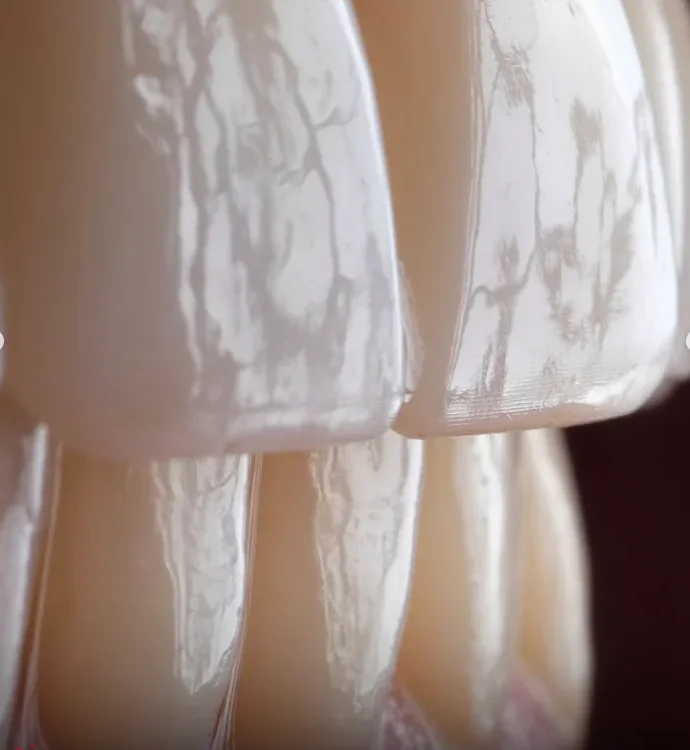
What preparation actually does to the tooth
A veneer needs somewhere to sit, so a thin layer is removed from the front surface of the tooth before the ceramic shell is bonded on. That removal is not reversible. Once it is done, that tooth will always need a restoration of some kind — you cannot go back to the untouched original. That is worth sitting with before you commit, not something to decide in a single call.
Veneer or crown — and why it is not one decision for your whole mouth
| Veneer | Crown | |
|---|---|---|
| Covers | The front surface of the tooth | The whole tooth |
| Suits a tooth that is | Largely sound, needing a shape or colour change | Heavily filled, root-treated or broken down |
| Material options | IPS e.max | IPS e.max or zirconia |
This is decided tooth by tooth, at the examination, not for your mouth as a package. If a clinic quotes "veneers" for a case where several teeth actually need crowns, you are being sold a lighter procedure than the one that will be carried out. Ask which of the two is on your plan, per tooth, and get it in writing. Current per-unit pricing for both is on our veneer and crown cost page.
When whitening or orthodontics is the honest answer instead
If the only issue is colour, whitening may get you there without touching a single tooth. If it is alignment, orthodontics can straighten teeth over time with no enamel removed at all. A veneer is the right tool when the goal is shape or colour on teeth that whitening and straightening cannot fix — not the default answer to every complaint about a smile.
When a veneer is not the right treatment for you
- Active gum disease or decay. These are treated first. Bonding a veneer over an untreated problem does not make the problem go away.
- A tooth that is heavily filled, root-treated or broken down. A veneer needs enough sound structure to bond to. Past that point, a crown — which covers the whole tooth — is the honest answer, not a thinner shell forced onto a weaker base.
- Untreated bruxism (clenching or grinding). It loads ceramic and shortens its life, and it is outside our warranty cover until it is addressed.
- Missing teeth, not just teeth you want to look different. A veneer has nothing to bond to if the tooth is not there. See dental implants instead.
- You are picturing a full-mouth transformation without a unit count. If what you actually want is a dramatic, all-at-once smile change, read what that usually involves before agreeing to it — see our Hollywood smile page.
What you leave with
A written, itemised plan stating the material and unit count before you commit, and a 5-year warranty on crowns and veneers against manufacturing and material defect, running from completion of treatment.
Planning First
Why a photo cannot tell you veneer or crown
A photograph cannot tell you whether a front tooth carries a veneer or a crown — clinics routinely show one while delivering the other. The teeth here were present and sound enough to keep, which is the condition a veneer needs. Where teeth are missing or broken down, this is not the right page; see dental implants instead.

From The Clinic
Digital scanning and treatment planning
A short look at how a case is scanned and planned, tooth by tooth, before any ceramic work begins.
What people ask about veneers
How much enamel does a veneer remove?
Preparation removes a thin layer from the front surface of the tooth to make room for the ceramic shell. It is a permanent change to a natural tooth, which is why it is worth taking time over the decision rather than agreeing to it on a first call.
Is a veneer or a crown the right choice for my tooth?
It depends on how much healthy tooth structure is left. A veneer covers the front surface of a largely sound tooth; a crown covers the whole tooth and is the honest answer once a tooth is heavily filled, root-treated or broken down. This is decided tooth by tooth, not for your whole mouth at once.
Can whitening or orthodontics achieve the same result as veneers?
Sometimes, yes. If colour is the only issue, whitening may be enough. If it is alignment, orthodontics can straighten teeth without removing any enamel at all. Where either would get you what you want, that is what we will recommend — it is the smaller invoice, and we say so anyway.
How many visits does veneer treatment take?
Typically the tooth is prepared and a temporary fitted on one visit, then the final ceramic restoration is bonded on a later visit once it has been made. Both usually happen within one trip — see our guide to planning trip length for the specifics.
Do veneers work if I am missing teeth, not just unhappy with their shape?
No — a veneer needs an existing tooth to bond to. Missing teeth are an implant question, not a veneer one.
Send a photo, get a per-tooth answer
We will tell you which of your teeth actually need a veneer, which need a crown, and which need nothing at all.